
Again, not an example of the meeting with the devil at the crossroads but instead one of a pact with the devil involving a contest. In The Poison Eaters and Other Stories by Holly Black, Easthampton, MA: Big Mouth House, 2010, 29-47.
"How about this--I will wager my services against something of yours. If you beat me at any contest of your choosing, your dog will be well and you'll owe me nothing."
"Really? Any contest?" she asked.
He held out his hand. "Shake on it and we've got a deal."
His skin was warm and dry in her grip.
"So, what is it going to be?" he asked. "You play the fiddle? Or maybe you'd like to try your hand at jump rope?" (page 40-41)
Also available in Sympathy for the Devil: Stories of the Devil edited by Tim Pratt. San Francisco: Night Shade Books, 2010, 51-61.
Originally published in The Coyote Road: Trickster Tales edited by Ellen Datlow & Terri Windling. New York: Viking, 2007, 418-436.
In the author's note, Holly Black writes: "In folklore, the devil's attempts to steal souls often involves humorous and impossible contests....I wondered how the devil would cheat at such a contest and wound up writing "A Reversal of Fortune." (436)
And no, I am not revealing the nature of this particular contest -- I highly recommend you seek out any of the three collections (or all of them) and find out for yourself.
Sunday, August 29, 2010

Friday, August 27, 2010
Devil Spotting: The Prince of Mist
Although the motif of the meeting with the devil at the crossroads is not present in Carlos Ruiz Zafon's The Prince of Mist, the impact (pardon the pun) of making a pact with the devil is a major theme of this young adult novel. Also present in all its disturbing "glory" is the motif of the clown statue.
"The day Jacob Fleischman drowned I knew that the Prince of Mist had never left. He had remained in the shadows, waiting patiently for something powerful to return him to the world of the living. And nothing is as powerful as a promise..." (122)
From Bill Sheehan's review in Subterranean Press:
"On its most fundamental level, Zafon's novel is a lively, thoroughly modern retelling of one of the essential narratives of Western Civilization: The Faustian Compact, which can be summed up in a single sentence: Take what you want--and pay for it." (http://subterraneanpress.com/index.php/magazine/summer-2010/review-the-prince-of-mist-by-carlos-ruiz-zafon/)
For more information on the book and its author: http://www.hachettebookgroup.com/features/princeofmist/index.html
"The day Jacob Fleischman drowned I knew that the Prince of Mist had never left. He had remained in the shadows, waiting patiently for something powerful to return him to the world of the living. And nothing is as powerful as a promise..." (122)
From Bill Sheehan's review in Subterranean Press:
"On its most fundamental level, Zafon's novel is a lively, thoroughly modern retelling of one of the essential narratives of Western Civilization: The Faustian Compact, which can be summed up in a single sentence: Take what you want--and pay for it." (http://subterraneanpress.com/index.php/magazine/summer-2010/review-the-prince-of-mist-by-carlos-ruiz-zafon/)
For more information on the book and its author: http://www.hachettebookgroup.com/features/princeofmist/index.html
Wednesday, August 11, 2010
Ballad Spotting: Book Review
I have not read this novel as of yet but it certainly sounds intriguing and part of the Stories from Songs canon:
http://www.telegraph.co.uk/culture/books/bookreviews/7936795/Charles-Jessold-Considered-as-a-Murderer-by-Wesley-Stace-review.html
http://www.telegraph.co.uk/culture/books/bookreviews/7936795/Charles-Jessold-Considered-as-a-Murderer-by-Wesley-Stace-review.html
Sunday, July 18, 2010
Ballad Spotting: Silver Borne by Patricia Briggs
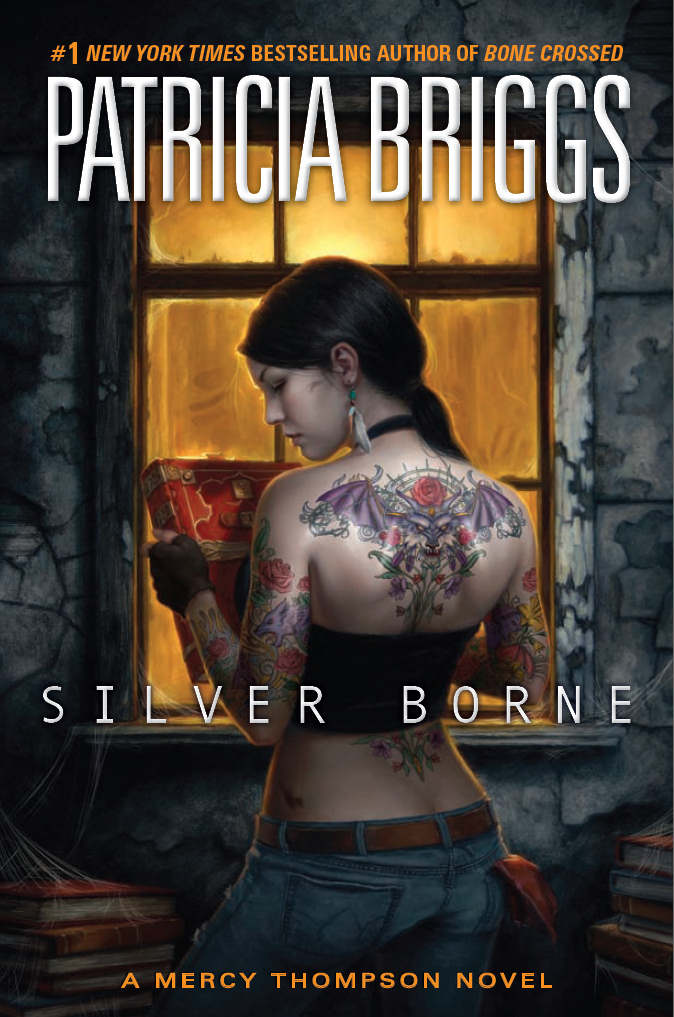

Several direct mentions of ballads and songs within the text of this novel, published in 2010, offer the aware reader delightful foreshadowing of action and consequences:
Thomas the Rhymer (page 196) and the passing of time in the world of the Fae: "I underlined Thomas the Rhymer's name because it was history and Rip was a story by Irving that might or might not have been based on various legends--including Thomas's."
Tam Lin (page 305). While this ballad is not named, those who are familiar with the Faery Queen's final challenge to Janette would recognize it immediately: " A different bargain, then. You hold something of my choosing while it changes." Briggs satisfactorily presents the challenge for this reader.
Not a ballad but a song relevant to my present research: The Devil Went Down to Georgia (page 284) "Bargaining? Like in the song 'The Devil Went Down to Georgia' but with a fairy?" I asked. It seemed to me that I'd heard a similar tale with fairies in it.
"Right," Samuel agreed. "It can be a contest--usually musical, because fairy queens tend to be musically talented. But there are stories of footraces or swimming contests. My father has a wonderful old song about a young man who challenged a fairy to an eating contest and won."
Tuesday, May 18, 2010
The Boneshaker at Chasing Ray
A lovely review and interview with author Kate Milford with crossroad references:
http://www.chasingray.com/archives/2010/05/you_come_to_know_the_road_that.html
More about my experience with the book soon.
http://www.chasingray.com/archives/2010/05/you_come_to_know_the_road_that.html
More about my experience with the book soon.
Wednesday, April 28, 2010
THE BONESHAKER @ THE CROSSROADS
Enjoying Kate Milford's The Boneshaker and her playing with "the devil and the crossroads" legend. More when I finish it.
Friday, February 19, 2010
A book review
A lovely book review of Stories from Songs can be found at:
CM Magazine
An excerpt from the review by Kay Weisman:
De Vos's writing is thorough and scholarly, yet accessible. Each thematic chapter covers several relevant ballads; she provides plot summaries, alternate titles, performance histories, critiques of critical research, and discussions of contemporary literary versions, including novels, short stories, graphic novels, poetry, and internet resources. She also includes numerous tables that organize related details such as the developmental stages of a particular ballad or the variants of a song.
For example, author's section on "The Gypsy Laddie," from the chapter on tragic love stories, notes that this is a Child ballad, type 200, about a lady who, enchanted by the gypsies, follows their leader, Johnny Faa. Her husband rides to fetch her, killing 15 gypsies in the process. De Vos describes several common variations, noting artists such as Bob Dylan and Woody Guthrie and the versions they have sung. She cites more than fifty alternate titles for this song, including "How Old Are You My Pretty Little Miss?" and "Black Jack Davey," and summarizes the history of this ballad in a chart with entries dating back to Plato in the fourth century. In addition, she cites and describes more than thirty critical interpretations of this song, published between 1932 and 2004. She notes three related novels (including Philip Pullman's The Golden Compass), three short stories, three poems, one picture book, and three relevant web sites. Each literary adaptation is fully described and critiqued.
De Vos does not discuss melodies, preferring to concentrate instead on the stories. Her work is heavily footnoted, and her numerous references will serve as a useful resource for other researchers. Multiple indexes (author/illustrator/musician, ballad, and title) assure that readers will find what they are looking for, making this a good choice for high school or university fine arts collections.
CM Magazine
An excerpt from the review by Kay Weisman:
De Vos's writing is thorough and scholarly, yet accessible. Each thematic chapter covers several relevant ballads; she provides plot summaries, alternate titles, performance histories, critiques of critical research, and discussions of contemporary literary versions, including novels, short stories, graphic novels, poetry, and internet resources. She also includes numerous tables that organize related details such as the developmental stages of a particular ballad or the variants of a song.
For example, author's section on "The Gypsy Laddie," from the chapter on tragic love stories, notes that this is a Child ballad, type 200, about a lady who, enchanted by the gypsies, follows their leader, Johnny Faa. Her husband rides to fetch her, killing 15 gypsies in the process. De Vos describes several common variations, noting artists such as Bob Dylan and Woody Guthrie and the versions they have sung. She cites more than fifty alternate titles for this song, including "How Old Are You My Pretty Little Miss?" and "Black Jack Davey," and summarizes the history of this ballad in a chart with entries dating back to Plato in the fourth century. In addition, she cites and describes more than thirty critical interpretations of this song, published between 1932 and 2004. She notes three related novels (including Philip Pullman's The Golden Compass), three short stories, three poems, one picture book, and three relevant web sites. Each literary adaptation is fully described and critiqued.
De Vos does not discuss melodies, preferring to concentrate instead on the stories. Her work is heavily footnoted, and her numerous references will serve as a useful resource for other researchers. Multiple indexes (author/illustrator/musician, ballad, and title) assure that readers will find what they are looking for, making this a good choice for high school or university fine arts collections.
Subscribe to:
Posts (Atom)