
I discussed this ballad/legend in Stories from Songs. Here is Adam YJ's look at it:
http://www.fairytalefandom.com/2015/04/the-stuff-of-legends-mulan.html
"While the original story may be a bit bare
bones, the ability of this story to change with the times and cultures and appeal to new
generations really does make it The
Stuff of Legends!"
Showing posts with label Ballads. Show all posts
Showing posts with label Ballads. Show all posts
Friday, April 24, 2015

Wednesday, January 25, 2012
Ballad Sptting: Tam Lin
From the "Once Upon a Blog" : The Ballad of Tam Lin (explored in my book Tales Then and Now co-authored with Anna Altmann
http://fairytalenewsblog.blogspot.com/2012/01/tam-lin-grimm.html?utm_source=feedburner&utm_medium=feed&utm_campaign=Feed%3A+blogspot%2FVFWg+%28Once+Upon+A+Blog...%29
http://fairytalenewsblog.blogspot.com/2012/01/tam-lin-grimm.html?utm_source=feedburner&utm_medium=feed&utm_campaign=Feed%3A+blogspot%2FVFWg+%28Once+Upon+A+Blog...%29
Wednesday, August 3, 2011
Ballad Spotting: Thomas the Rhymer
From: Feature Interview: Seanan McGuire
I studied folklore in college, and I’m still studying it now, as an adult. I expect to be studying folklore for the rest of my life. With that in mind, I truly believe that the current blurring of the borders between fantasy, horror, and romance are not representative of a mutation; they’re representative of a bunch of walls we didn’t really need finally coming down. The oldest stories we have were, at the time, what we would classify as “urban fantasy” today. Thomas the Rhymer? His mother was dead when he was conceived, and he was carried to term in her coffin (horror). He fell in love with the Queen of Faerie, calling her “Queen of Heaven” and charming her heart (romance). So she took him to the fairy lands to dwell by her side (fantasy), even though they had to wade through red blood to the knee to get there (horror). Eventually, he chose to leave her to return to his own kind, and she cursed him with honesty (fantasy). In the end, he returned to her, and to Faerie, forevermore (romance). When this story was new, the settings it used were as familiar to the people who heard it as Chicago or Melbourne or San Francisco will be to modern readers of urban fantasy.
In some of the oldest forms of the Snow White/Rose Red story, there’s a third sister, Lily Fair. I like to say that urban fantasy writers are the Children of Lily Fair, the ones seeking the balance between Snow White’s fantasy and Rose Red’s horror. We’re the place where the lines drop away, and that’s a beautiful place to be.
Tuesday, August 2, 2011
Ballad spotting: The Mermaid: Child Ballad 289
http://surlalunefairytales.blogspot.com/
The Mermaid: Child Ballad 289: "


One of the side benefits of working on the SurLaLune fairy tale anthologies is that I am becoming more familiar with various Child Ballads. While I enjoy ballads, they hadn't inspired much research on my part until the last few years. (There just isn't the time to do everything that interests me!)
I previously posted about Clerk Colvill, Child Ballad 42, which I enjoyed as I edited Mermaid and Other Water Spirit Tales From Around the World . The other ballad I included in the collected is Child 289 and I personally prefer it over Clerk Colvill. Most commonly known as The Mermaid, seven versions from Child appear in my book under various titles, including Greenland, The Seaman's Distress, and The Stormy Winds Did Blow. As I read it, Iwanted to listen to it, so I hunted some versions down on the internet.
Here's the text to Child 289B, which more closely resembles many of the modern recorded versions. Actually, most of them tend to be a hybrid of 289A, 289B and 289C. The ballad draws from the superstition that when sailors spy a mermaid, a shipwreck is imminent.
One of my favorite versions isn't a recording for purchase, but a homemade video on YouTube which I am embedding below. I enjoyed the simplicity of the tune and the variations it offered on the ballad itself. Here it is:


As for recorded versions available for download, I preferred The Mermaid Song by the Floorbirds.


Other versions you might prefer include The Mermaid by The Pirates of St. Piran and The Mermaid
 by Celtic Stew.
 "
The Mermaid: Child Ballad 289: "
One of the side benefits of working on the SurLaLune fairy tale anthologies is that I am becoming more familiar with various Child Ballads. While I enjoy ballads, they hadn't inspired much research on my part until the last few years. (There just isn't the time to do everything that interests me!)
I previously posted about Clerk Colvill, Child Ballad 42, which I enjoyed as I edited Mermaid and Other Water Spirit Tales From Around the World
. The other ballad I included in the collected is Child 289 and I personally prefer it over Clerk Colvill. Most commonly known as The Mermaid, seven versions from Child appear in my book under various titles, including Greenland, The Seaman's Distress, and The Stormy Winds Did Blow. As I read it, Iwanted to listen to it, so I hunted some versions down on the internet.Here's the text to Child 289B, which more closely resembles many of the modern recorded versions. Actually, most of them tend to be a hybrid of 289A, 289B and 289C. The ballad draws from the superstition that when sailors spy a mermaid, a shipwreck is imminent.
ONE Friday morn when we set sail,
Not very far from land,
We there did espy a fair pretty maid
With a comb and a glass in her hand, her hand, her hand,
With a comb and a glass in her hand.
While the raging seas did roar,
And the stormy winds did blow,
While we jolly sailor-boys were up into the top,
And the land-lubbers lying down below, below, below,
And the land-lubbers lying down below.
Then up starts the captain of our gallant ship,
And a brave young man was he:
“I’ve a wife and a child in fair Bristol town,
But a widow I fear she will be.”
For the raging seas, etc.
Then up starts the mate of our gallant ship,
And a bold young man was he:
“Oh! I have a wife in fair Portsmouth town,
But a widow I fear she will be.”
For the raging seas, etc.
Then up starts the cook of our gallant ship,
And a gruff old soul was he:
“Oh! I have a wife in fair Plymouth town,
But a widow I fear she will be.”
And then up spoke the little cabin-boy,
And a pretty little boy was he;
“Oh! I am more grievd for my daddy and my mammy
Than you for your wives all three.”
Then three times round went our gallant ship,
And three times round went she;
For the want of a life-boat they all went down,
And she sank to the bottom of the sea.
One of my favorite versions isn't a recording for purchase, but a homemade video on YouTube which I am embedding below. I enjoyed the simplicity of the tune and the variations it offered on the ballad itself. Here it is:
As for recorded versions available for download, I preferred The Mermaid Song
by the Floorbirds. Other versions you might prefer include The Mermaid
by The Pirates of St. Piran and The Mermaid by Celtic Stew.Friday, July 29, 2011
Fairytale Reflections (29) Sally Prue
Fairytale Reflections (29) Sally Prue: "


 "
When Sally Prue’s first novel, ‘Cold Tom’ won the Branford Boase Award and the Smarties Prize Silver Award in 2002, it was clear that a wonderful new writer of folklore-based fantasy had arrived. ‘Cold Tom’ taps into many legends and ballads about the fairies - the Tribe, which lives on the common. They are cold-hearted, dangerous, feral hunters, pitiless to those who, like Cold Tom himself, are different. And they see humans as demons: ugly lumpen beings, hopelessly tied and enslaved to one another by a tangle of emotional bonds like vines.
It’s a powerful and startling image, and one of those moments only fantasy provides: when we step right out of the human world and see it from outside, like seeing the Earth from space. Cold Tom is only half elfin. His fangs aren’t growing, the Tribe rejects him, and the only place to run is the city of the demons. How on earth can he adjust to humanity and the ties that bind us?
Sally’s writing reminds me of Diana Wynne Jones who wrote books of otherworldly beauty – I’m thinking of ‘Power of Three’ and ‘The Spellcoats’ – as well as more homely and amusing stories for younger readers, such as the Chrestomanci books. ‘Cold Tom’ and its recent sequel (or more accurately prequel) ‘Ice Maiden’ are YA reads: chilling, haunting, sharp-edged. Here young half-German Franz, who has fallen into a pit on the common while chasing the elfin Edrin, finds a heap of elfin bones, and prods the skull:
This time there was no doubt: the white bone moved. More than that, it gave way, swiftly, bewilderingly, and before he could stop it his finger had gone right through the bone into the brain cavity.
He snatched his hand back in horror, but somehow, horribly, the whole skull came with it. Panicking, he tried to bat the thing off with his other hand, but those fingers sank into the stickily melting bone of the skull, too.
And suddenly Franz’s head was full of savage laughter, and glowing eyes, and dangerous darkness.
And singing.
Sally is also the author of a trilogy of books for younger, ‘middle grade’ readers: the Truth Sayer Trilogy. As Sally comments on her website: “You know how people are always going into a different world and then discovering that everyone speaks English? Well, what if they don’t?”
I love this. Young Nian is taken away from his family by the Tarhun, warrior priests, to be trained as a seer and Truth Speaker at the House of Truth on the Holy Mountain. Nian may have great powers, but he misses his family and finds the stern House little better than a prison. So he tries to escape. This sounds like the stuff of many other fantasy novels, but Sally’s sense of humour and strong characterisation distinguish Nian’s erratic career across the universes, landing in our own world – Earth – in the bedroom of a very ordinary boy called Jacob. Neither can understand a word the other says, and comic mayhem follows. In a way, it’s the same theme as the Cold Tom books: looking at our world from outside, seeing ourselves as others see us. The trilogy also encompasses a variety of thought-provoking ideas about the nature of time and space, and besides the comedy, there are some tremendous moments of imagination and terror: as in the second book of the trilogy, the March of the Owlmen, when the knife-sharp, two-dimensional Owlmen come slicing into the world.
So welcome to Sally Prue, who is going to talk about searching for fairyland and finding it (maybe) closer than you expected: in the mirror, out in the yard, around the back of the supermarket carpark. For as Franz thinks to himself at the beginning of ‘Ice Maiden’ – ‘This wasn’t a folk tale, this was 1939. There were no elves or fairies here, any more than there were wolves. It was impossible, completely impossible, there could be any kind of creature anywhere near him… And at this same moment something hit him violently in the back.’
THE ENCHANTED MIRROR

We didn’t lack books in my childhood home. I mean, we had a Bible, a Be-Ro cookery book, David Copperfield, Shakespeare, and, oddly, the collected poems of Walter de la Mare.
Mind you, of these only the cookery book was ever actually opened.
But we had a large blue set of Arthur Mee’s Children’s Encyclopaedias, too. I think they must have been my father’s. They were from the 1930s and extremely dull. Occasionally, though, the pages of dense text and murky photographs of the Queen Mary’s turbines were enlivened by brief re-tellings of classic tales.
Now, I must be honest here. As a child I had no taste. What I wanted from a story was, first of all a HAPPY ENDING, and secondly REALLY NICE CLOTHES. Ideally that meant princesses, but even a goose girl would do as long as her rags were elegantly tattered and her apron strings were blown into delectable volutes.


I very happily read all Arthur Mee had to say about Cinderella, Sleeping Beauty and The Ugly Duckling (a great favourite: I was the only girl in my class without fair hair and so I was constantly cast as the witch in our singing games. But oh, I thought, perhaps one day...).
Those were important stories. They introduced me to beauty in art. They taught me that the values of my family were not the values of the whole world. They taught me to hope.
For the time being, though, I was young, and therefore enslaved and helpless. To make matters worse the land of the princesses was plainly very far away. I knew of no real-life princesses except Princess Anne, and she seldom appeared swathed in acres of bouncing chiffon, which was surely the entire point of being a princess.
(Actually, Princess Anne never appeared in acres of bouncing chiffon. I just couldn’t begin to understand it. Reefer jackets?)

Now, unfortunately, Arthur Mee’s stories were not very many, and not very long, and I soon began to suffer from serious princess-starvation. Looking back, I can see that in the man’s world of the 1930s Arthur Mee had been generous to include any princesses at all. They were probably as unappealing to him as the Queen Mary’s innards were to me. But there it was: all too soon a thoroughly satisfactory story like Snow White would be followed by something about Camelot or Olympus which were dull dull dull, with few happy endings and fewer princesses, and those there were dressed in either their nighties (Olympus) or their dressing gowns (Camelot).
I realise that so far I have proved myself to have been the dullest, least numinous sort of child (so lacking in genius that I was quite unable to make anything at all of David Copperfield, Shakespeare, or Walter de la Mare) but I’m sorry to say that things are about to get even worse, because for my seventh Christmas my Cousin Ann bought me a copy of Chimney Corner Stories by Enid Blyton.
Now, I don’t think there are any princesses at all in Chimney Corner Stories, and Enid Blyton isn’t really interested in clothes, either: there’s one really shocking tale about a doll who cuts up her lace coat to make some curtains for a dolls house, an act of madness of which the author seems, astonishingly, to approve.
Still, Enid Blyton’s stories are solidly constructed and I found them extremely satisfying. By far the most marvellous thing of all, though, was that in several of the stories the elves come out of fairyland into our own world. One elf gives wishes to ordinary children (and I was, as we have seen, a very ordinary child) and another (actually I think it might have been a goblin) is banished from fairyland for wickedly stealing hairs from caterpillars to make paint brushes.
Now that was truly astonishing, because it meant that fairyland couldn’t far away at all. Those elves and gnomes were coming and going from fairyland to my world just as easily as I left home to go to school.
Think of that! Snow White’s country was clearly a long way away (and once upon a time, as well) but these gnomes were emerging from their fairyland straight into contemporary England – a rather smug version of contemporary England which included servants and ponies, true, but recognisable for all that.
Not only that, but when I looked at the fairies’ clothes (always the clothes!) I saw that some of them were wearing bellbine hats. Now, bellbine grows along municipal chain-link fencing everywhere in England. Why, bellbine even grew through the hedge between my house and the plastic bag factory!


And if there were bellbine flowers, then perhaps...well, even Sir Arthur Conan Doyle (as I learned from the children’s TV programme Blue Peter) had believed there might be fairies at the bottom of the garden.
I searched and searched among the bellbine, and occasionally I saw something, or just missed seeing something, or heard a mysterious rustling, which might have been a fairy. It was enough to keep my new hopes alive.
When I got to the junior school I had access to more books, and my horizons widened accordingly. I learned about the wardrobe, of course (my parents’ wardrobe contained not one single fur coat and perhaps that was why it proved a continuing disappointment) and later, I suppose by this time at secondary school, I learned about Herne the Hunter in Windsor Great Park, and the god (or goddess) Sul who lives in the hot spring at Bath.
I learned about a very local haunting, Harcourt’s Chariot, which rattles precipitously down the Back Hollow from Ashridge to Aldbury.
I learned about the Romans’ lares and penates which guard boundaries and households. I found out about the green men who have been hiding in the foliage around us for so long that no-one knows any longer where they came from or why they are watching us.
This intrusion of otherworldly beings into my own England was startlingly different from the stories of Camelot and Olympus, and different from the stories of the princesses, too. Herne and Harcourt and the green men were here, now, close as breathing, casting shadows on my back. Mount Olympus might be a real place, but it was far beyond my reach (I’m sorry to say that the furthest we’d ever gone on a family holiday was Lyme Regis).
In any case, to visit the Olympians you needed Hermes’ wings, or Iris’s rainbow: there was no way, even in my wildest fantasies, I was going to find Apollo mooching about round the back of a plastic bag factory. (I admit that nymphs seemed to get about a bit, but nymphs were like Star Trek security men: shallow in character and soon dead.)
I was realistic enough to know, anyway, that even if I could get to Olympus or glum Camelot then none of those grand people – Lancelot or Zeus or Morgan Le Fay or Hera – was going to be the slightest bit interested in me. (If Adele Geras’s marvellous stories of the Greek gods had been available I might have felt differently about this, but, alas, they were yet to be written.)
So that left me with Herne the Hunter and various ghosts, pixies and green men – none of them, frankly, either snoggable or the sort of people you could take home to meet your parents. My interest in fairyland wobbled.
But then one day a boyfriend said do you like folk music? and put on a record. It was a song about a real place, Carterhaugh, where it is so easy to pass from England to fairyland that the tale begins with a warning:
Oh I forbid you, maidens a’
That wear gowd in your hair,
To come or gae by Carterhaugh
For young Tam-lin is there.
Tam-lin. And suddenly there it was, opening before me: a handsome prince grown close and dangerous, stepping out of the pages of a book and onto the real earth of my own country.
Janet has kilted her green kirtle
A little aboon her knee...
And she’s awa to Carterhaugh
As fast as she can hie.
And who, frankly, can blame her?
Oh yes, and suddenly the roots of fairyland were growing out and penetrating into real life again, into my life, for Janet is no beflounced princess, but a woman of warm blood and hot desire who knows what she wants and is prepared to fight to get it.
Yes. I discovered I was now old enough to journey far – and fight for what I wanted, too.
Fairyland had grown, just as I had, and yet again, like an enchanted mirror, it was showing me not my own reflection but my heart’s desire. Over the years it had presented to me visions of beauty, hope, escape, romance, and in the end courage.
And I’ll tell you something. That boyfriend never got away.
Picture credits:
Sally Prue
Tam Lin copyright Dan Dutton
Princess Anne in The Courier
The Convulvulous Fairy by Cicely Mary Barker
Picture credits:
Sally Prue
Tam Lin copyright Dan Dutton
Princess Anne in The Courier
The Convulvulous Fairy by Cicely Mary Barker
Friday, July 1, 2011
Ballad Sptting: Tam Lin
The ballad of Tam Lin is played out, with role reversals, as part of the subplot of Seanan McGuire's An Artificial Night: An October Daye Novel (Daw, 2010).
Everyone in the Bay Area knows about Blind Michael, the unseen, dangerous figure whose Hunt sweeps the Berkeley hills on full moon nights. He's a familiar hazard of life in the Kingdom of the Mists, and most people don't waste time worrying about him. October "Toby" Daye certainly doesn't. She has better things to worry about, like paying the electrical bill on time. So it's understandable that she'd be upset when Blind Michael suddenly starts taking an interest in people that matter to her, like the youngest children of Mitch and Stacy Brown.
Tasked to find the missing children, and with the stakes growing higher by the minute, Toby has few choices and fewer allies to help her through the dangers yet to come. With the Luidaeg's help and a candle to light her way home, there's a chance that she'll come through this latest danger...but the sudden appearance of her Fetch doesn't give Toby all that much in the way of hope...
An Artificial Night is the third book in the October Daye series, a modern urban fantasy set in both the San Francisco Bay Area and the Faerie Kingdom of the Mists which overlays Northern California.
[http://www.seananmcguire.com/aan.php]
Sunday, April 3, 2011
unsettling wonder « The Paradoxes of Mr. Pond
unsettling wonder « The Paradoxes of Mr. Pond
Mr. Pond's post discusses the Grimms' tale of "The Singing Bone" which I discuss in my book Stories from Songs.
Mr. Pond's post discusses the Grimms' tale of "The Singing Bone" which I discuss in my book Stories from Songs.
Saturday, March 12, 2011
Ballad Alert
Jeremy Love's BAYOU, Volume 2, includes a very scary dude: Stagolee. The story also includes visual allusions to Robert Johnson. On one hand, the devil and on the other, the man who legend has it made a deal with the devil for his musical prowess. I am looking forward to Volume 3 to see how the story develops.
Thursday, March 10, 2011
Sadko
Just to draw attention to the posting on SurLaLune Fairy Tales Blog on a picture book version of Sadko, one of the ballads (and books) I highlight in Stories From Songs.
http://surlalunefairytales.blogspot.com/2011/03/sea-kings-daughter-russian-legend-by.html
http://surlalunefairytales.blogspot.com/2011/03/sea-kings-daughter-russian-legend-by.html
Thursday, February 10, 2011
Truth Seeker by C. E. Murphy

The contemporary legend:
"Where did you come from? A pool full of water fell out of the sky, and then you did. I didn't see a -- an airplane?" She looked skyward, and Lara did, too, remembering urban legends she'd read about scuba divers found in the middle of forest fires, dropped there by helicopters scooping seawater to battle the fires with. She wished she had a similar story to explain away her arrival. (page 153)
The ballad:
"In fairy tales if the fair folk stay in our world it's usually because they're trapped somehow and aren't strong enough to get away. Like Tam Lin except in reverse."
"And it was mortal love that saved Tam Lin when he rode back into this world with the queen's host," Ioan said. Lara looked between them, bewildered, through Kelly's expression said she knew the story. "Had Janet come to Annwn to rescue him, she never would have been able to free him. We're weakened by this world," Ioan said again... (286)
Thursday, December 9, 2010
Ravenna by Stacey Curnow
"First off, it bases its story on my favorite King Arthur legend, Sir Gawain and the Loathly Lady (I’m partial to the Selina Hastings version myself)." Elizabeth Bird
Read the entire review at http://blog.schoollibraryjournal.com/afuse8production/2010/12/09/review-of-the-day-ravenna-by-stacey-curnow/
Read the entire review at http://blog.schoollibraryjournal.com/afuse8production/2010/12/09/review-of-the-day-ravenna-by-stacey-curnow/
Saturday, November 13, 2010
Legend tripping and Tam Lin
I have been working on my research for my new manuscript on the topic of legend tripping. A google search on the term resulted in an entry from Wikipedia which was of double interest to me as it incorporates two of my fascinations-- contemporary legends and ballads. The entry begins:
Legend tripping, also known as ostension,[1] is a name recently bestowed by folklorists and anthropologists on an adolescent practice (containing elements of a rite of passage) in which a usually furtive nocturnal pilgrimage is made to a site which is alleged to have been the scene of some tragic, horrific, and possibly supernatural event or haunting. The practice has been documented most thoroughly to date in the United States.
[1] Ellis, Bill. "Legend Trips and Satanism: Adolescents' Ostensive Traditions as 'Cult' Activity." In The Satanism Scare, ed. James T. Richardson, Joel Best, and David G. Bromley, 279-95. NY: Aldme DeGreyter.
It then continues...
Much older versions of the custom may be glimpsed in traditional ballad tales such as the ballad of Tam Lin. In this ballad, a young woman is warned that the elf Tam Lin is known to haunt a place called Carterhaugh, and that all who go there must lose either an article of clothing or their virginity to Tam Lin. Janet, the heroine, defies the warning: she goes to Carterhaugh, picks a rose, encounters Tam Lin, and becomes pregnant with his child. She learns that Tam Lin was once human, and that to free him, she must make a second trip on Halloween night to a crossroads, where she has an encounter with the Queen of Elphame, and succeeds in reclaiming Tam Lin from fairyland.
In both the old ballad and in Mark Twain's version, there is a specific location that is supposed to be accursed, ghost-haunted, or otherwise dangerous. There is a folk story, of the type that is now called an urban legend, that explains why the place is haunted, accursed, or dangerous. The story is retold in preparation for the legend trip. In outward form, the legend is a cautionary tale warning of a danger; in practice, however, the cautionary tale is turned into a dare, inviting the trippers to go test its veracity. There is sometimes a ritual that must be performed at the site, the ritual is explained in the legend. The ritual invokes whatever dangerous spirits haunt that place.
http://en.wikipedia.org/wiki/Legend_tripping#cite_note-Ellis-0
Wednesday, August 11, 2010
Ballad Spotting: Book Review
I have not read this novel as of yet but it certainly sounds intriguing and part of the Stories from Songs canon:
http://www.telegraph.co.uk/culture/books/bookreviews/7936795/Charles-Jessold-Considered-as-a-Murderer-by-Wesley-Stace-review.html
http://www.telegraph.co.uk/culture/books/bookreviews/7936795/Charles-Jessold-Considered-as-a-Murderer-by-Wesley-Stace-review.html
Sunday, July 18, 2010
Ballad Spotting: Silver Borne by Patricia Briggs
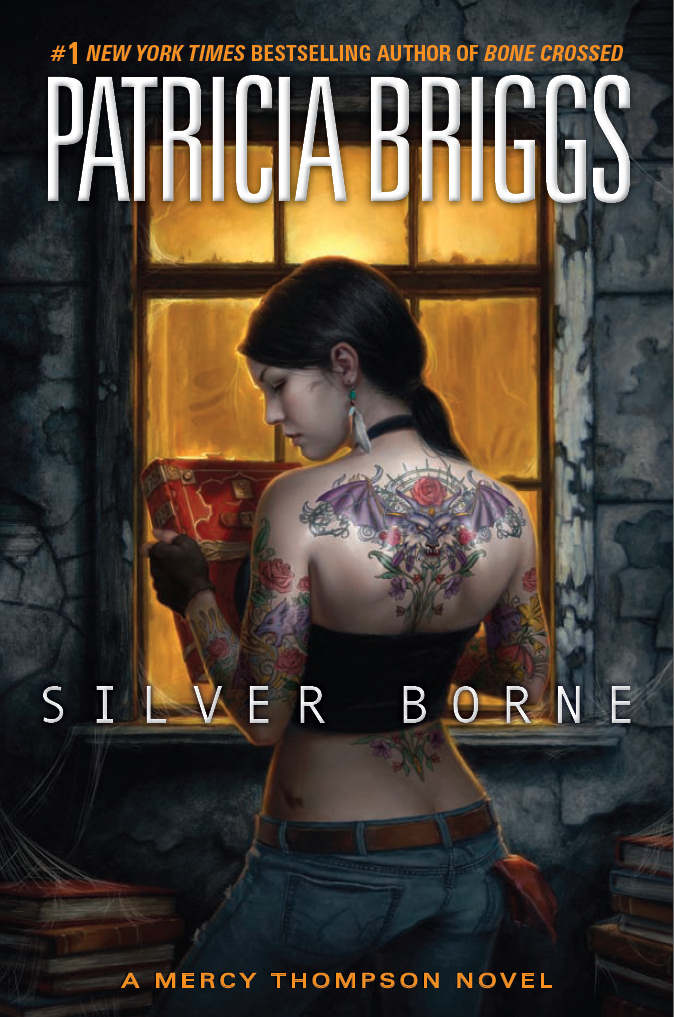

Several direct mentions of ballads and songs within the text of this novel, published in 2010, offer the aware reader delightful foreshadowing of action and consequences:
Thomas the Rhymer (page 196) and the passing of time in the world of the Fae: "I underlined Thomas the Rhymer's name because it was history and Rip was a story by Irving that might or might not have been based on various legends--including Thomas's."
Tam Lin (page 305). While this ballad is not named, those who are familiar with the Faery Queen's final challenge to Janette would recognize it immediately: " A different bargain, then. You hold something of my choosing while it changes." Briggs satisfactorily presents the challenge for this reader.
Not a ballad but a song relevant to my present research: The Devil Went Down to Georgia (page 284) "Bargaining? Like in the song 'The Devil Went Down to Georgia' but with a fairy?" I asked. It seemed to me that I'd heard a similar tale with fairies in it.
"Right," Samuel agreed. "It can be a contest--usually musical, because fairy queens tend to be musically talented. But there are stories of footraces or swimming contests. My father has a wonderful old song about a young man who challenged a fairy to an eating contest and won."
Friday, February 19, 2010
A book review
A lovely book review of Stories from Songs can be found at:
CM Magazine
An excerpt from the review by Kay Weisman:
De Vos's writing is thorough and scholarly, yet accessible. Each thematic chapter covers several relevant ballads; she provides plot summaries, alternate titles, performance histories, critiques of critical research, and discussions of contemporary literary versions, including novels, short stories, graphic novels, poetry, and internet resources. She also includes numerous tables that organize related details such as the developmental stages of a particular ballad or the variants of a song.
For example, author's section on "The Gypsy Laddie," from the chapter on tragic love stories, notes that this is a Child ballad, type 200, about a lady who, enchanted by the gypsies, follows their leader, Johnny Faa. Her husband rides to fetch her, killing 15 gypsies in the process. De Vos describes several common variations, noting artists such as Bob Dylan and Woody Guthrie and the versions they have sung. She cites more than fifty alternate titles for this song, including "How Old Are You My Pretty Little Miss?" and "Black Jack Davey," and summarizes the history of this ballad in a chart with entries dating back to Plato in the fourth century. In addition, she cites and describes more than thirty critical interpretations of this song, published between 1932 and 2004. She notes three related novels (including Philip Pullman's The Golden Compass), three short stories, three poems, one picture book, and three relevant web sites. Each literary adaptation is fully described and critiqued.
De Vos does not discuss melodies, preferring to concentrate instead on the stories. Her work is heavily footnoted, and her numerous references will serve as a useful resource for other researchers. Multiple indexes (author/illustrator/musician, ballad, and title) assure that readers will find what they are looking for, making this a good choice for high school or university fine arts collections.
Friday, January 22, 2010
Ballad Spotting: Twa Sisters
"The Mournful Lady of Binnorie: Based on a Scottish Ballad" by Bobbie Pell, a spirited (if you pardon the pun) retelling of "Twa Sisters" can be found in The August House Book of Scary Stories: Spooky Tales for Telling Out Loud, edited by Liz Parkhurst. August House, 2009, 27-33.
The story notes incorporate the ballad background and suggest that "you may wish to sing the protions that have remained in verse. Remember that a capella singing (without instrumental accompaniment) is also the traditional delivery style." (32) The sources Pell provides for her story include the Child Ballad, the adaptation by Lorenna McKennitt ("The Bonny Swans") and Joseph Jacobs prose version, "Binnorie."
More information on the many reworkings of this ballad can be found in my Stories From Songs.
Saturday, January 9, 2010
A reworking of Barbara Allen?
From http://edinburghnews.scotsman.com/features/Book-reviews.5969185.jp
"A Fair Maiden: A Novel of Dark Suspense by Joyce Carol Oates is published by Quercus, priced £12.99.
Arguably one of Joyce Carol Oates's lesser works, A Fair Maiden: A Novel of Dark Suspense is a novella intricately linked to the anonymous Ballad of Barbara Allen about a young boy who dies of unrequited love for the callous young beauty, extracts of which are quoted in the text.
Infusing the novel with a mythical resonance, Oates weaves a different kind of tale, wherein 16-year-old nanny Katya Spivak from South Jersey is wooed by 68-year-old painter Marcus Kidder, a silver-haired member of posh Bayhead Harbour's established elite.
At first, his interest seems innocuous, even irreproachable, but then he insists they are "soul mates" and invites her to be his model and muse, eventually asking from her more than what she had bargained.
This brisk suspense is a story of intrigue, an examination of class differences and the complex permutations of love, revealing the curious results that stem from Katya and Mr. Kidder's unlikely relationship."
5/10 Review by Trisha Andres
Saturday, January 2, 2010
Podcastle
Thanks to a Face book posting by Ellen Kushner today, I have been introduced to a treasure load of fantasy podcasts at http://podcastle.org/.
I found several relevant podcasts for Stories from Songs.
The most recent (relevant) podcast is that of Marie Brennan's Twa Corbies, read by Elie Hirschman which can be found at
http://podcastle.org/2009/12/16/podcastle-82-the-twa-corbies/
A second relevant podcast is that of Delia Sherman's Fiddler of Bayou Teche, read by Elizabeth Green Musselman. http://podcastle.org/2009/07/21/podcastle-62-the-fiddler-of-bayou-teche/
I will be posting additional links as I explore this site more fully.
Monday, November 2, 2009
Ballad spotting: "Mad, Bad & Dangerous: The Demon Lover
In the latest issue of Realms of Fantasy (December 2009)there is a Folkroots article by SatyrPhil Brucato entitled "Mad, Bad & Dangerous: The Demon Lover." At a first quick glance the article focuses on the archetype of the Demon Lover with references to popular culture such as the Twilight series, numerous fairy tales such as Little Red Riding Hood. The article briefly alludes to numerous Child ballads such as "The Demon Lover," "Tam Lin," "Lady Isabel and the Elfin Knight" and "The Gypsy Lover" all discussed in my book Stories from Songs but alas, my book receives no mention.
Ah well, it is a worthwhile read nonetheless!
Ah well, it is a worthwhile read nonetheless!
Sunday, October 4, 2009
Spotlight on Stagger Lee
Subscribe to:
Posts (Atom)